What is a Steel Crown?
A steel crown is a durable metal-based covering used especially in pediatric dentistry to protect primary teeth with significant substance loss.
By encasing the remaining tooth structure, it supports both chewing function and the tooth’s retention in the mouth.
- It is a frequently preferred restoration for primary teeth.
- It aims to increase the tooth’s durability.
- It is often used after root canal treatment or extensive fillings.

Why Should I Choose a Steel Crown?
When there is very little tooth tissue left due to decay or fracture in primary teeth, ordinary fillings may not be sufficient; a steel crown surrounds the tooth, providing more secure protection.
Thanks to its long-lasting structure, it increases chewing comfort in children and can reduce the risk of early tooth loss.
- It is highly durable.
- It is a practical solution for young children.
- It helps keep the tooth in the mouth.
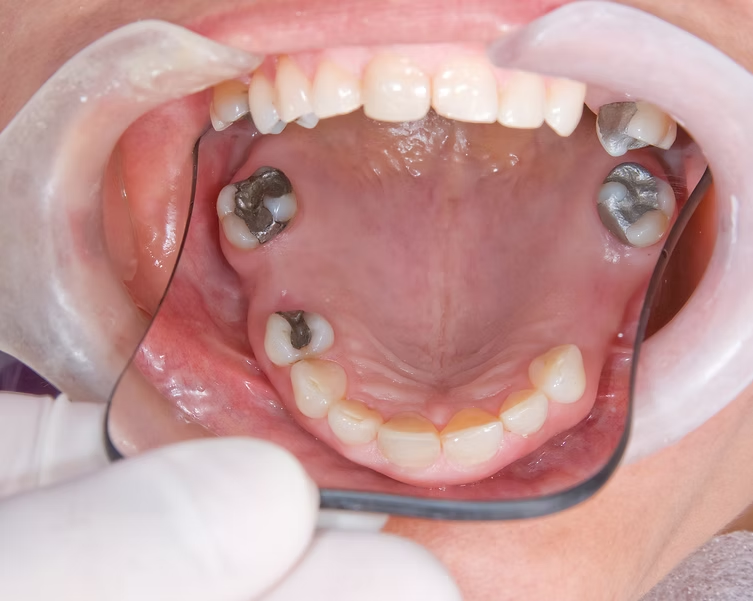
Am I a Suitable Candidate for a Steel Crown?
Primary teeth with large cavities, primary teeth that have undergone root canal treatment, or children’s teeth with significant substance loss due to fracture may be suitable for a steel crown.
Which tooth is suitable is determined after examination and X-ray, because not every primary tooth is protected in the same way.
- Primary teeth requiring extensive restoration.
- Teeth that need strengthening after root canal treatment.
- Children’s teeth that must withstand chewing load.
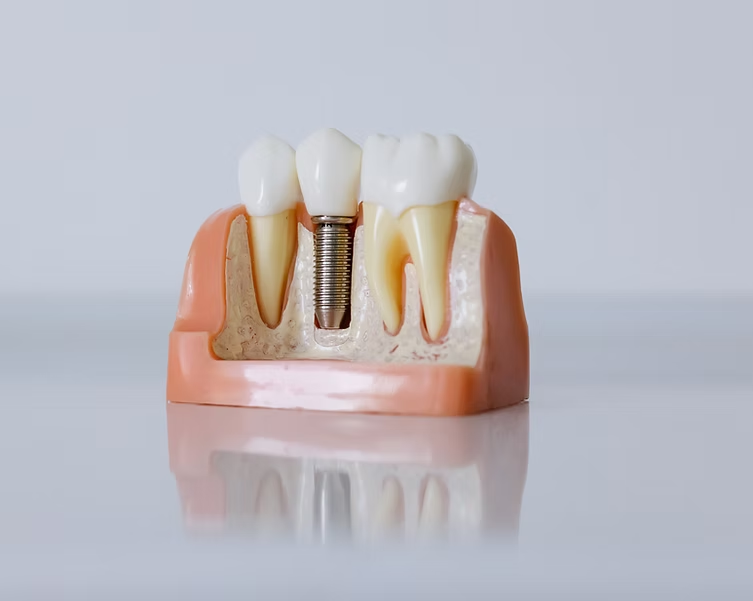
Advantages of Steel Crowns
Steel crowns are among the quickly applicable, durable, and protective restorations in pediatric dentistry.
By encasing the remaining part of the tooth, they help reduce the risk of recurrent decay and contribute to the continuation of function.
- They offer high durability.
- They provide protection for teeth with significant substance loss.
- They can be used as a long-term primary tooth restoration.
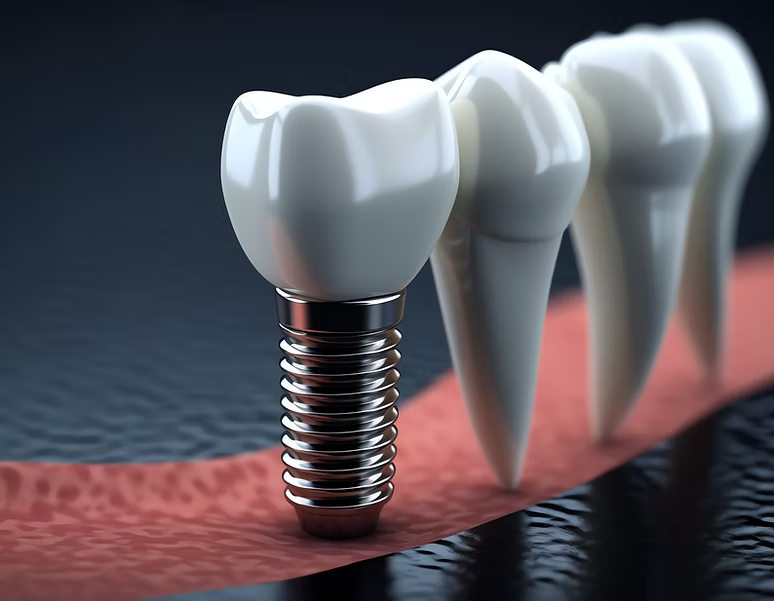
In Which Cases Is a Steel Crown Applied?
Steel crowns may be preferred for large cavities, primary teeth weakened after root canal treatment, fractured teeth, and children’s teeth that cannot be adequately strengthened with fillings.
Additionally, it is an important option when it is necessary to keep the tooth in the mouth for space maintenance.
- In large cavities.
- After root canal treatment.
- In cases where there is a need to protect a primary tooth.

How Does the Steel Crown Treatment Process Proceed?
First, the tooth is evaluated, necessary preparation is made, and after reducing the tooth to an appropriate form, the steel crown is tried and placed.
In the final check, the crown’s fit to the occlusion and the child’s biting function is assessed.
- Examination and planning are done.
- The tooth is prepared and the crown is placed.
- The procedure is completed with a fit check.
What Is the Recovery Time After a Steel Crown?
Recovery after a steel crown is usually quick; the child can often return to normal chewing soon.
Mild sensitivity may occur on the first day, but in most cases it subsides quickly.
- Care should be taken until numbness wears off.
- Hard foods can be avoided for a short time.
- Check-ups should be done regularly.
Plan your smile with free consultation. Book your online appointment in 30 minutes.