What Are Dental Implants?
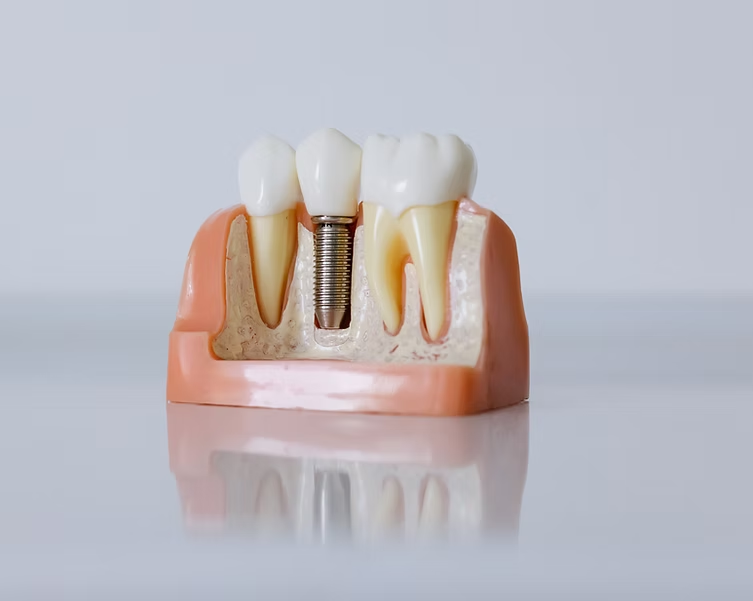
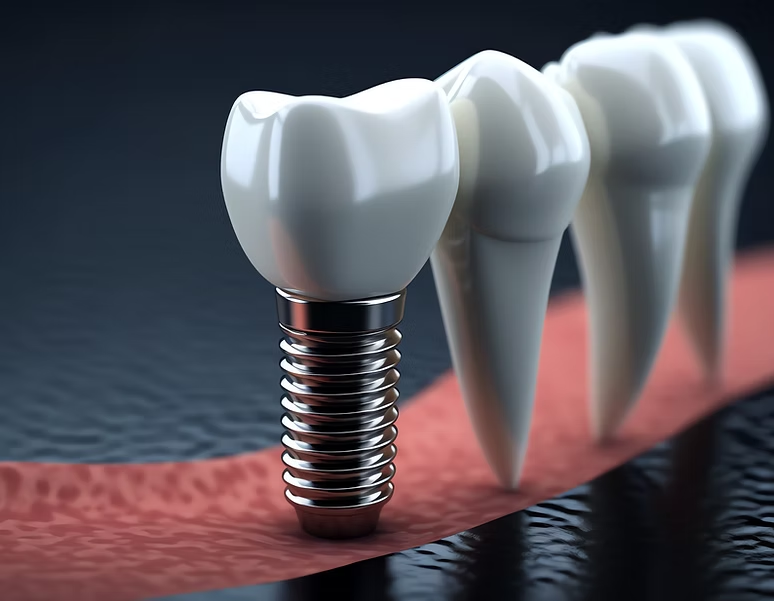
• Explain that an implant is a biocompatible artificial tooth root, commonly made from titanium, placed in the jawbone to support a restoration.
• Clarify the difference between the implant fixture, abutment, and final crown, bridge, or full-arch prosthesis.
• Explain osseointegration in simple language and why it is important for stability.
• State that implants can replace one tooth, several teeth, or a complete dental arch.
Why Replace Missing Teeth With Dental Implants?
• Explain the functional effects of missing teeth, including changes in chewing, speech, bite balance, and tooth movement.
• Cover potential benefits such as fixed tooth replacement, improved chewing comfort, natural-looking restoration options, and preservation of adjacent teeth compared with conventional bridges.
• Explain that bone changes can occur after tooth loss and that prompt assessment may help preserve treatment options.
• Present benefits as potential outcomes rather than promises.
Who Is Suitable for Dental Implants?
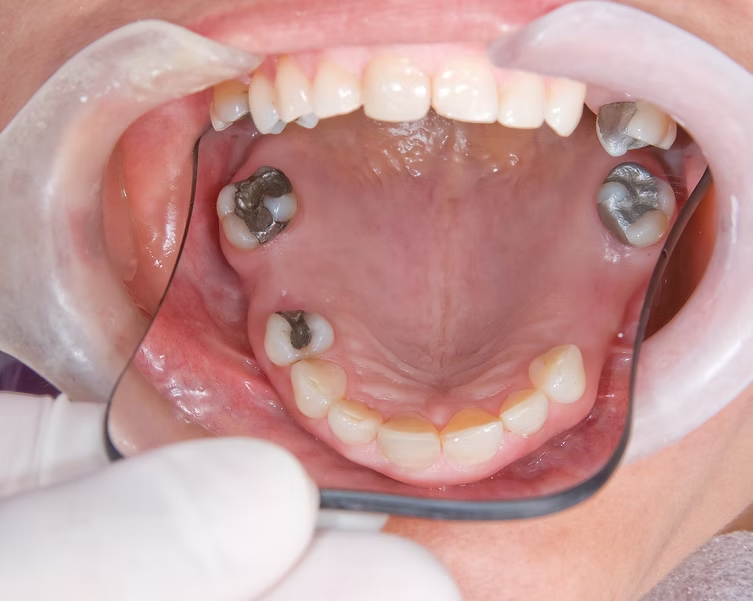
• Describe common candidates, including adults with one or more missing teeth, severely damaged teeth requiring extraction, or unstable dentures.
• Explain the importance of healthy gums, adequate bone volume, stable general health, and commitment to oral hygiene and follow-up care.
• Mention factors requiring individual assessment, including uncontrolled diabetes, active gum disease, smoking, teeth grinding, certain medications, previous radiotherapy, and immune conditions.
• Clarify that age alone is not usually a barrier once jaw growth is complete.
Clinical Assessment and Digital Treatment Planning
• Outline the assessment process, including medical history, oral examination, bite assessment, photographs, X-rays, and three-dimensional imaging where clinically indicated.
• Explain how digital planning helps assess bone availability, nearby nerves, sinus anatomy, implant position, and final tooth design.
• Emphasise that an online review of scans or photographs can provide preliminary guidance but does not replace an in-person examination.
The Dental Implant Treatment Process
• Explain the treatment journey from consultation and planning through implant placement, healing, restoration fitting, and follow-up.
• Mention that local anaesthesia is commonly used and that sedation options may be considered where appropriate.
• Explain that the overall timeline varies based on healing, bone quality, number of implants, need for extra procedures, and restoration type.
• Encourage clear pre-treatment communication about planned visits, temporary teeth, final restorations, and aftercare requirements.

Healing and Osseointegration
• Explain that the implant needs time to integrate with the jawbone before receiving the final restoration in many cases.
• Describe how healing periods vary and why the clinician may recommend a staged approach for predictability.
• Distinguish between a temporary restoration and the final crown, bridge, or full-arch prosthesis.
Tooth Extraction and Immediate Implant Placement
• Explain that an implant may sometimes be placed at the time of extraction if infection control, bone condition, gum tissue, and primary stability are suitable.
• Clarify that immediate placement is not appropriate for every case.
• Explain that delayed placement may be recommended to allow healing or after grafting procedures.
Single Tooth Dental Implant
• Explain how one implant and crown can replace one missing tooth without preparing neighbouring healthy teeth.
• Mention that crown material and shade are selected to suit the smile, bite, and aesthetic zone.
Types of Dental Implant Restorations
• Introduce the main restoration options based on the number and location of missing teeth.
• Clarify that the number of implants and final design are determined by anatomy, bite forces, oral health, and aesthetic needs.
Implant-Supported Bridge
• Explain how several missing teeth may be replaced by a bridge supported by strategically positioned implants.
• Clarify that not every missing tooth requires a separate implant.
Full-Arch Dental Implants
• Describe full-arch fixed restorations for patients missing most or all teeth in one jaw.
• Explain the difference between fixed full-arch teeth and removable implant-supported dentures.
• Mention approaches such as All-on-4 and All-on-6 as treatment concepts that depend on individual bone anatomy and clinical planning.
Same-Day Dental Implants and Immediate Temporary Teeth
• Define same-day treatment accurately: implant placement with a temporary restoration on the same day in selected cases.
• Clarify that same-day teeth do not always mean same-day final teeth.
• Explain key eligibility factors, including implant stability, bone quality, bite forces, gum condition, infection status, and number of implants.
• State that a staged approach may be safer and more predictable for some patients.
Do You Need Bone Grafting or a Sinus Lift?
• Explain why bone volume may reduce after tooth loss and how this can affect implant positioning.
• Describe bone grafting and sinus lift procedures in clear, non-technical language.
• Explain that these procedures may extend the treatment timeline but can create appropriate support for implants.
• Emphasise that imaging and clinical assessment determine whether additional procedures are necessary.
Dental Implants Compared With Bridges and Dentures
• Compare implants, conventional bridges, and removable partial dentures in a clear table or structured comparison.
• Cover stability, impact on neighbouring teeth, removability, maintenance needs, treatment time, cost considerations, and suitability.
• Explain that the best option depends on oral health, anatomy, budget, lifestyle, and long-term goals.
Is Dental Implant Treatment Painful?
• Explain that implant surgery is performed with anaesthesia and that patients should not feel pain during the procedure.
• Set realistic expectations for temporary soreness, swelling, bruising, and tenderness after surgery.
• Explain that post-operative discomfort varies depending on the complexity of treatment and individual healing.
• Mention that the clinical team provides tailored medication and aftercare instructions when required.
Recovery and Aftercare After Dental Implants
• Outline early recovery guidance, including medication use, oral hygiene instructions, soft foods, hydration, and protecting the surgical area.
• Explain why smoking and alcohol can interfere with healing and should be discussed before treatment.
• Mention warning signs that require prompt contact with the dental team, such as persistent bleeding, increasing swelling, fever, severe pain, or a loose restoration.
• Cover ongoing care, including brushing, interdental cleaning, professional hygiene visits, bite checks, and night guards for patients who grind their teeth.
Risks and Possible Complications
• Present a balanced overview of possible complications, including infection, delayed healing, implant mobility, gum inflammation, bone loss around implants, nerve-related symptoms, and sinus-related concerns in the upper jaw.
• Explain that careful planning, qualified clinical care, appropriate materials, oral hygiene, and follow-up visits help reduce risk but cannot eliminate it.
• Clarify that implant failure can sometimes be managed through removal, healing, grafting if needed, and reassessment for replacement.
How Long Do Dental Implants Last?
• Explain that implants are designed as a long-term tooth replacement solution, but longevity depends on individual factors.
• Cover the influence of oral hygiene, gum health, smoking, diabetes management, bite forces, teeth grinding, restoration quality, and regular maintenance.
• Clarify that while the implant fixture may last many years, crowns, bridges, and other components may require maintenance or replacement over time.
Dental Implant Costs and What Influences the Price
• Explain that costs vary according to the number of implants, restoration type, implant system, diagnostic imaging, laboratory work, sedation, temporary restorations, and additional procedures.
• Distinguish between the cost of an implant fixture and the total treatment cost, which may include the abutment, crown, bridge, temporary teeth, grafting, and follow-up visits.
• Advise readers to request an itemised treatment plan that explains inclusions, exclusions, materials, stages, and expected future maintenance.
Planning Dental Implant Treatment Abroad
• Guide international patients on sharing recent panoramic X-rays, CBCT scans where available, photographs, medical history, and previous dental records for an initial review.
• Explain that travel duration depends on whether treatment involves surgery only, temporary restorations, final restorations, or additional grafting procedures.
• Recommend allowing flexibility for clinical findings, recovery, and follow-up appointments rather than booking return travel too tightly.
• Encourage patients to ask about communication support, written treatment plans, materials used, post-treatment instructions, and continuity of care after returning home.
Questions to Ask Before Choosing a Dental Implant Clinic
• Suggest checking the treating clinician’s qualifications, implant experience, and approach to complex cases.
• Advise patients to ask about diagnostic imaging, sterilisation protocols, implant brands and component availability, laboratory standards, and treatment alternatives.
• Recommend requesting a clear explanation of the proposed treatment stages, healing expectations, possible additional procedures, and total estimated costs.
• Encourage patients to understand what follow-up support is available if concerns arise after returning home.
Plan your smile with free consultation. Book your online appointment in 30 minutes.

Frequently Asked Questions About Dental Implants
Dental Implant Prices in Turkey (2026)
Implant prices vary depending on the implant brand, surgical technique, and your bone condition. Compared to Europe, implant treatment in Turkey offers the same high-quality care at significantly lower prices.
✅ Free initial consultation
✅ Transparent pricing
✅ Personalized treatment planning
Why Choose Turkey for Dental Implants?
- Up to 60-70% more affordable than Europe
- Certified and experienced implant specialists
- Clinics equipped with the latest technologies
- Combine your treatment with a holiday
- Fast treatment process and results
Why Should You Choose Dentasay?
Dentasay Oral and Dental Health Clinic is one of the leading clinics in dental implants and cosmetic dentistry in Turkey. With our 100% patient satisfaction-focused approach, transparent pricing policy, and advanced digital technologies, we offer reliable and aesthetic results.
- Special care for international patients
- Same-day implant options
- World-class sterilization standards
- Affordable pricing – top quality
Who can get dental implants?
Dental implants can be applied to anyone with sufficient jaw bone volume, good general health, and good oral hygiene. They are ideal for people with missing teeth, those who do not want dentures, or those who are not satisfied with their current prostheses.
How is the procedure done?
The procedure begins with the surgical placement of implant screws into the jawbone under local anesthesia. The fusion of implants with the bone usually takes 3-6 months. After this healing, a prosthetic tooth or crown is placed on the implant. In some cases, immediate loading techniques can shorten the treatment time.
What are the preparation stages?
Before treatment, a comprehensive examination, dental X-rays, and if necessary, 3D tomography scans are performed. This evaluates the bone structure, nerve positions, and optimal implant placement. A personalized treatment plan is prepared. Additional procedures such as bone grafting or sinus lifting can be planned if needed.
What is the healing process like?
After surgery, mild swelling and sensitivity may occur, but it usually resolves within a few days. Osseointegration (fusion of the implant with the bone) takes several months. During this period, paying attention to oral hygiene and following the dentist’s recommendations accelerates healing.
What are the advantages?
Implants offer a permanent solution for missing teeth without affecting neighboring teeth. They improve chewing function and speech. They feel like natural teeth and are aesthetically pleasing. Implants prevent bone loss and help preserve facial contours.
How should implant care be done?
Implants should be brushed and flossed like natural teeth. Regular dental check-ups are essential. Avoid smoking and other habits that negatively affect oral health. Proper oral hygiene is very important for the longevity of implants.
How long does the treatment take?
The osseointegration period usually lasts 3-6 months. In special cases, immediate loading can shorten this period. The treatment duration varies depending on the patient’s general health and bone structure.