What is Pediatric Tooth Extraction?
Pediatric tooth extraction is the controlled removal of a primary tooth or some young permanent teeth from the mouth due to reasons such as decay, infection, trauma, or crowding.
The aim is to reduce the child’s pain and infection risk, maintain oral health, and support the eruption pattern of the underlying permanent teeth when necessary.
- Primary teeth may sometimes be extracted prematurely.
- The procedure is planned according to the developmental stage.
- If needed, the need for a space maintainer is evaluated separately.

Why Should I Choose Pediatric Tooth Extraction?
Some teeth may become unsalvageable due to decay or infection. In such cases, extraction can be the right solution to reduce pain and prevent larger problems.
Extraction may also be necessary in situations where uncontrolled infection spreads, affects neighboring teeth, or makes eating difficult.
- It can eliminate the source of pain and infection.
- It can increase the child’s comfort in a short time.
- It can help protect the developing dental arch.
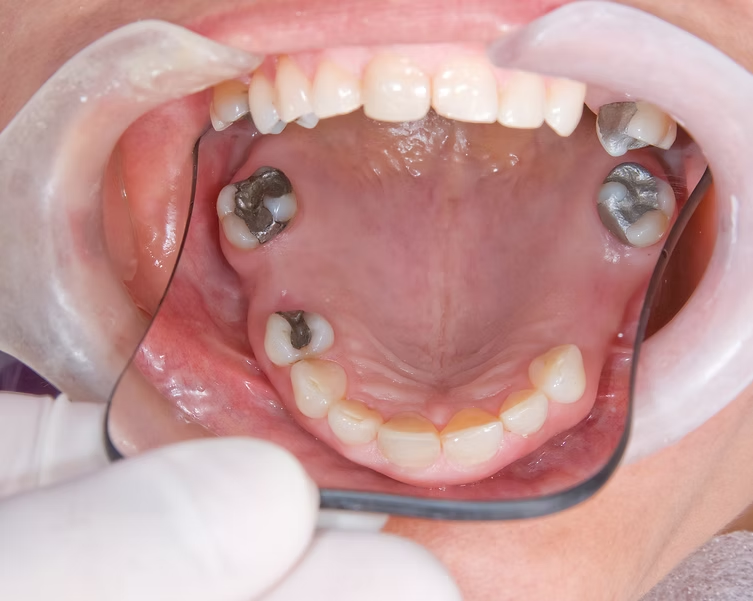
Am I a Suitable Candidate for Pediatric Tooth Extraction?
Primary teeth that are too decayed to be restored, teeth that cannot be saved after trauma, advanced infection, or teeth causing eruption problems may be considered for extraction.
The type and age of the tooth and the condition of the underlying permanent tooth are clarified through examination.
- Unsalvageable primary teeth.
- Severely infected teeth.
- Teeth that need to be extracted due to orthodontic or eruption planning.
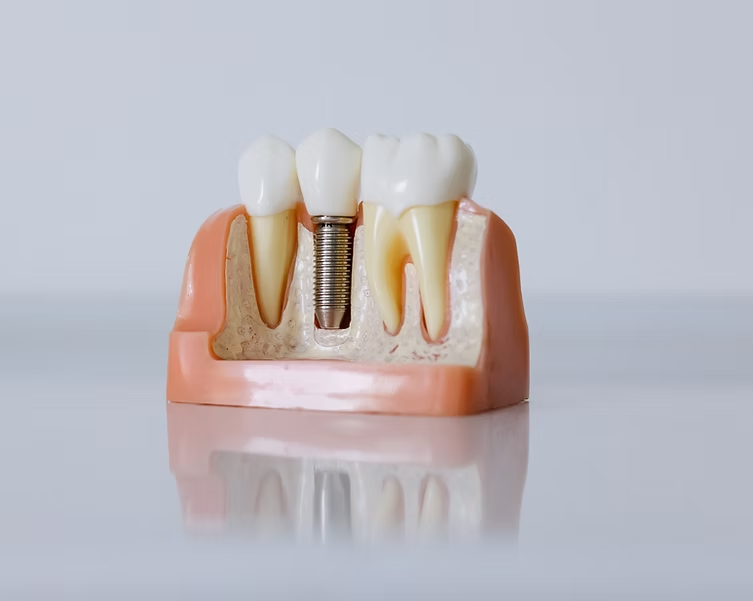
Advantages of Pediatric Tooth Extraction
In appropriate cases, extraction can quickly reduce the child’s pain and help prevent the spread of infection.
Additionally, in some cases, it contributes to creating a healthier oral arrangement for orthodontic planning.
- It eliminates the painful tooth.
- It helps reduce the risk of infection.
- If necessary, it prepares the ground for future treatments.

In Which Situations is Pediatric Tooth Extraction Applied?
Extraction may be applied in cases such as severe decay, abscess, trauma, crowding, eruption obstruction, or when a primary tooth causes problems by exceeding its natural shedding time.
Some extractions are planned, while others may require emergency intervention.
- Unsalvageable decayed teeth.
- Teeth fractured due to trauma.
- Primary teeth disrupting the eruption pattern.

How Does the Pediatric Tooth Extraction Treatment Process Progress?
First, the tooth and surrounding tissues are evaluated, then the procedure is planned; if necessary, local anesthesia is applied and the tooth is extracted in a controlled manner.
Afterwards, bleeding control, care recommendations, and if needed, a space maintainer or follow-up plan are established.
- Examination and evaluation are performed.
- After necessary anesthesia, the extraction is carried out.
- Final care and follow-up recommendations are given.
How Long Is the Recovery Time After Pediatric Tooth Extraction?
Recovery after extraction in children is usually fast; there may be mild sensitivity and bleeding in the first few days, but most children recover quickly.
It is important to follow the care instructions given by the physician to speed up recovery.
- The tampon must be kept in place for the first few hours.
- Hot, hard, and sticky foods should be avoided.
- Follow-up appointments should not be neglected.
Plan your smile with free consultation. Book your online appointment in 30 minutes.