What is Pediatric Root Canal Treatment?
Pediatric root canal treatment is a preventive dental procedure applied when the pulp tissue in primary teeth or young permanent teeth becomes inflamed or damaged.
The aim is to keep the tooth in the mouth, reduce pain, and prevent the spread of infection to surrounding tissues.
- Helps protect the primary tooth from early extraction.
- Supports the child’s chewing and speech functions.
- Contributes to the healthy development of the underlying permanent teeth.

Why Should I Choose Pediatric Root Canal Treatment?
If children’s teeth affected by deep decay or trauma are not treated, pain, abscess, and early tooth loss may develop. Root canal treatment is an effective option to save the tooth.
Preserving the primary tooth in the mouth can also help reduce the formation of gaps and the associated risk of crowding.
- Helps control pain and infection.
- Ensures the primary tooth continues its function.
- Increases the child’s daily comfort.

Am I a Suitable Candidate for Pediatric Root Canal Treatment?
Children with deep decay, post-traumatic color change, spontaneous pain, night pain, or signs of abscess can be evaluated for root canal treatment.
Definitive suitability is determined by examination of the tooth’s root development, infection status, and the tooth’s retainability in the mouth.
- Children with deep decay in primary teeth.
- Patients with pulp damage due to trauma.
- Young permanent teeth showing inflammation and sensitivity.

Advantages of Pediatric Root Canal Treatment
Pediatric root canal treatment offers the opportunity to save a painful and infected tooth without extraction, thus providing benefits in terms of both function and space maintenance.
It can also positively influence the child’s oral experience, facilitating their adaptation to future dental procedures.
- Can delay or prevent tooth loss.
- Preserves the child’s chewing comfort.
- Can help reduce space loss from an orthodontic perspective.
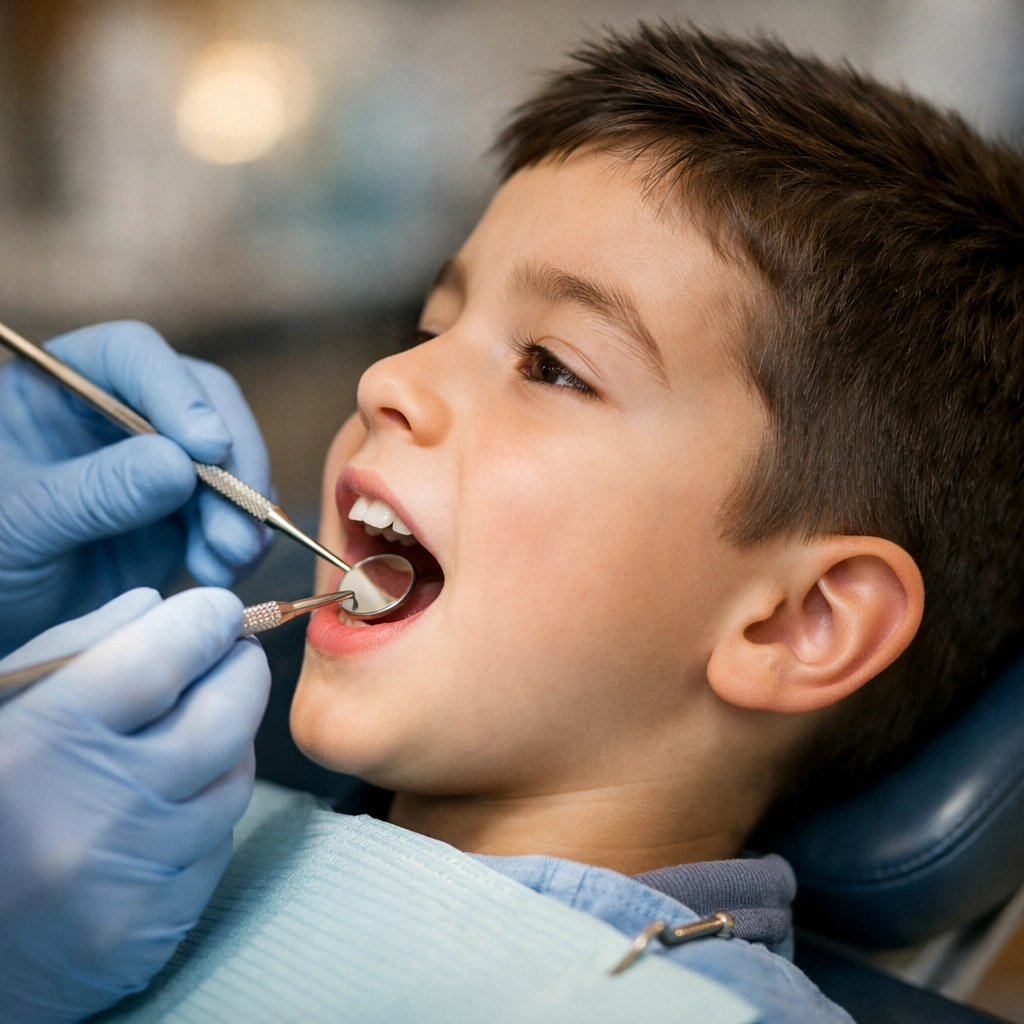
In Which Cases Is Pediatric Root Canal Treatment Applied?
Pediatric root canal treatment can be planned in cases of deep caries, traumatic injuries, infections reaching the pulp, abscess formation, or prolonged pain.
In some cases, pulpotomy is sufficient, while in others, full root canal treatment may be necessary.
- Children with increasing tooth pain at night.
- Patients with abscess or fistula on the tooth.
- Teeth with pulp damage after trauma.

How Does the Pediatric Root Canal Treatment Process Progress?
First, a detailed examination and, if necessary, X-ray evaluation is performed; then the infected pulp tissue is cleaned, the canal system is appropriately shaped, and the tooth is closed with filling/restoration.
In pediatric patients, the procedure can be completed in a single session or over several appointments depending on age and cooperation.
- The diagnosis and planning stage is important.
- Infected tissue is removed and the tooth is preserved.
- Afterwards, follow-up and restoration monitoring are performed.

How Long Is the Recovery Time After Pediatric Root Canal Treatment?
The recovery time depends on the infection level of the tooth and the extent of the procedure; mild sensitivity may decrease within a few days.
Regular usage recommendations, pain control, and compliance with follow-up appointments support the healing process.
- Mild sensitivity may occur in the first few days.
- Hard foods should be avoided for a short period.
- Follow-up appointments ensure healing.

Plan your smile with free consultation. Book your online appointment in 30 minutes.