What is Amputation?
In pediatric dentistry, amputation is a treatment based on removing only the inflamed upper pulp part of a primary or young permanent tooth while preserving the root pulp.
This approach aims to keep the tooth in the mouth without extraction and preserve the child’s chewing function.
- It is also commonly known as pulpotomy.
- The goal is to preserve the tooth for as long as possible.
- The root part of the tooth can remain viable under suitable conditions.

Why Should I Choose Amputation?
If only the upper part of the pulp is affected due to deep decay or trauma, amputation offers a conservative solution instead of extracting the tooth.
Keeping the primary tooth in the mouth helps maintain space and sustain the child’s daily functions.
- It can delay or prevent tooth extraction.
- It can increase the child’s comfort.
- It can support the eruption pattern of the underlying permanent tooth.
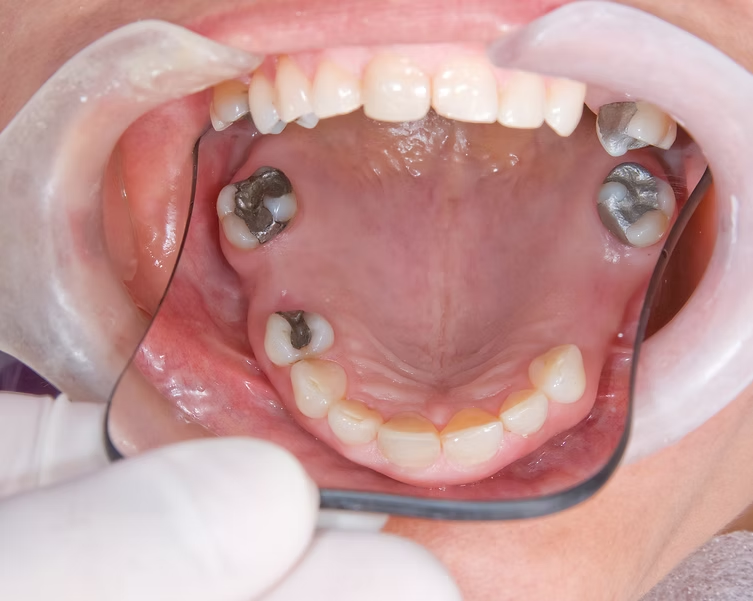
Am I a Candidate for Amputation?
A child may be evaluated for amputation in cases of deep decay, post-traumatic pain, temporary abscess signs, or infection affecting the upper part of the pulp.
The root part of the tooth must be able to remain healthy, and clinical/radiographic findings should be appropriate.
- Children with deep decay in a primary tooth.
- Teeth with partially affected pulp.
- Young permanent teeth with preserved root structure.
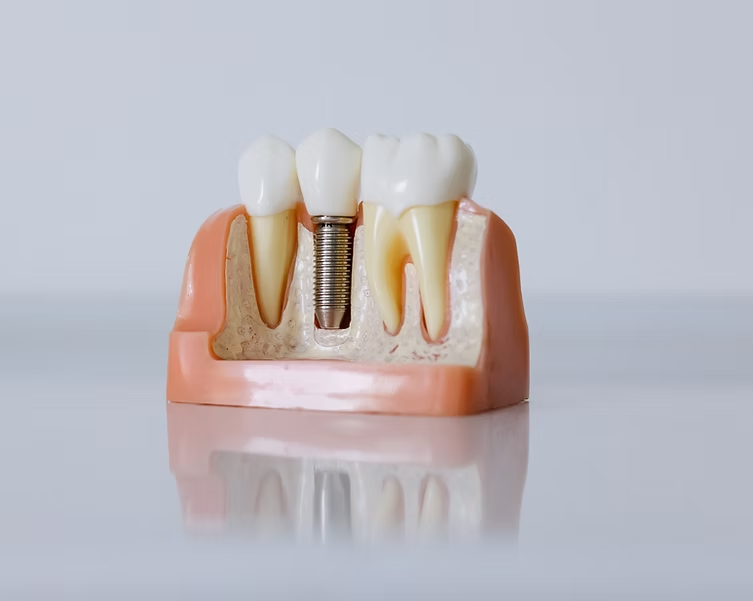
Advantages of Amputation
Amputation offers the possibility of treating the tooth without completely losing it and is important for function and space maintenance in pediatric patients.
When applied in the right case, it can reduce pain, control infection, and prevent further procedures.
- Helps keep the tooth in the mouth.
- Contributes to preventing space loss.
- It is a more conservative treatment approach for the child.
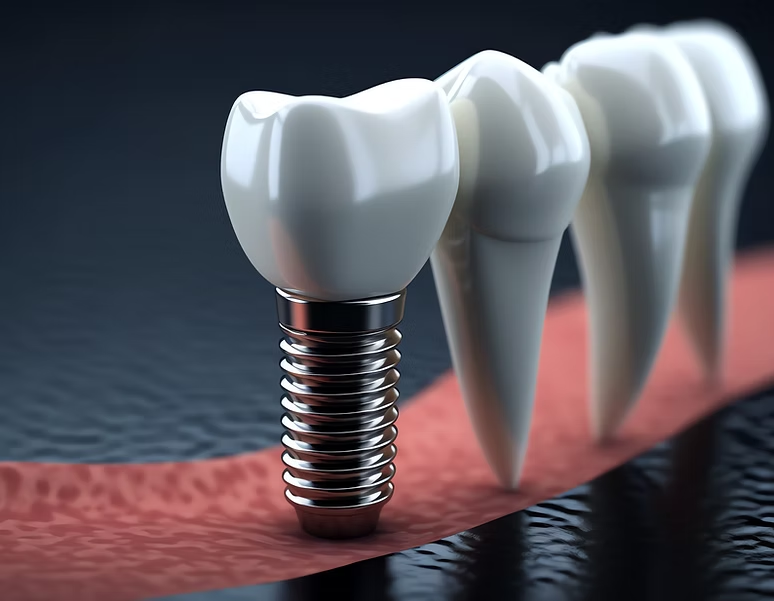
In Which Cases Is Amputation Applied?
It can be applied in cases of deep caries in primary teeth, trauma, pulp inflammation limited to the upper part, or cases where the root can be preserved despite pain.
In some cases, filling is not sufficient; amputation may be necessary to keep the tooth in the mouth.
- Deep infections that have not spread to the root.
- Pulp involvement after trauma.
- Primary tooth cases where space maintenance is important.

How Does the Amputation Treatment Process Progress?
First, the condition of the tooth is evaluated, then under local anesthesia, the upper pulp tissue is removed and the root pulp is protected with appropriate materials.
In the final stage, the tooth is closed with a filling or restorative material and a follow-up plan is created.
- Evaluation is done with examination and X-ray.
- The infected upper pulp part is removed.
- The tooth is restored and followed up.
How Long Is the Recovery Time After Amputation?
The recovery time is generally short; there may be mild sensitivity in the first few days after the procedure, but most children return to normal quickly.
Depending on the condition of the tooth and the material used, follow-up appointments are important for evaluating recovery.
- Care should be taken until numbness subsides.
- Hard foods may be avoided for a short time.
- Follow-up appointments should not be neglected.
Plan your smile with free consultation. Book your online appointment in 30 minutes.