
IPS e.max: Metal-Free, Natural-Looking All-Ceramic Dental Veneer
If you are looking for the highest level of naturalness and aesthetics in your smile, you are in the right place. At Dentasay Dental Clinic, we use the Ivoclar IPS e.max all-ceramic system, which has a clinical history of over 20 years worldwide. This material, which does not contain a metal substructure, transmits light like natural teeth, providing an extremely realistic and vibrant appearance.
On this page, we explain in simple language what IPS e.max is, what advantages it offers, in which cases it is preferred, and how the e.max veneer process works at Dentasay.
What is IPS e.max?
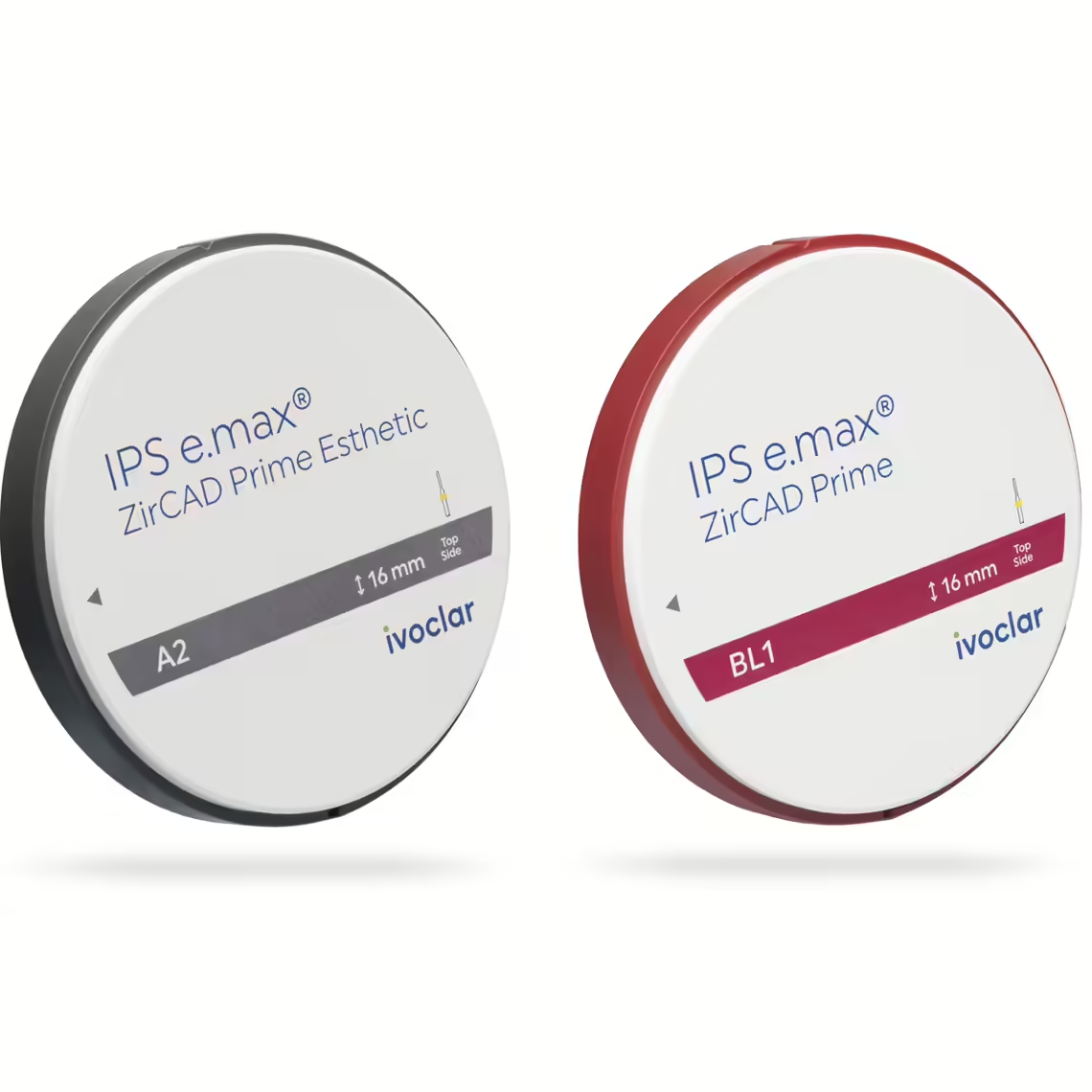
IPS e.max is a lithium disilicate-based glass-ceramic restoration material developed by Ivoclar (a world-leading dental company based in Switzerland/Liechtenstein). Launched in 2005, e.max has been used in over 230 million restorations worldwide and has become the standard in the field of all-ceramic dentistry.
Unlike traditional porcelain veneers, e.max veneers do not contain a metal substructure. This prevents a grayish shadow from forming at the gum line, and light passes through the material as it does in natural teeth, creating a lively, deep appearance.
Why Should You Choose IPS e.max at Dentasay?
The concrete advantages of choosing the IPS e.max veneer system for you are as follows:
- Superior Aesthetics: It almost exactly mimics the color, translucency, and brightness of natural teeth; your smile looks completely natural, not artificial.
- Metal-Free: Thanks to its fully ceramic structure, no gray/dark line forms at the gum line, providing an invisible result especially in the front tooth area.
- Minimal Tooth Reduction: Less tooth substance needs to be removed for e.max application, which means preserving your natural tooth tissue.
- High Durability: The lithium disilicate structure is designed to withstand daily jaw functions for a long time and is proven by clinical studies.
- Biocompatibility: The material structure, which is highly compatible with the body, minimizes the risk of gum irritation and allergic reactions.
- Wide Indication Range: It can be used in a wide range of treatments including veneers (laminate), inlays, onlays, single crowns, bridges, and implant-supported prostheses.
- Ivoclar Guarantee: IPS e.max restorations are covered by a 10-year warranty offered by the manufacturer Ivoclar.
In Which Cases is IPS e.max Preferred?
IPS e.max is a versatile solution that can be safely applied in almost all fixed prosthetic treatments. It stands out especially in the following cases:
- Those who want aesthetic veneers or laminates in the front tooth area
- Those who want to restore yellowed, cracked, or misshapen teeth with a natural appearance
- Those who complain of gum graying caused by metal-based veneers
- Those who need a single tooth crown, small bridge, or inlay/onlay filling
- Implant patients who want an aesthetic superstructure (crown) on the implant
- Those aiming for maximum aesthetic results with minimal tooth reduction
In cases where high chewing forces are involved in the posterior teeth, our dentist will evaluate e.max alone or together with zirconium and recommend the most suitable material plan for you. An examination at our clinic is sufficient for the final decision.
How Does the IPS e.max Coating Process Work at Dentasay?
Our treatment process consists of four steps that prioritize patient comfort and transparency:
- Examination and Smile Design
Your tooth structure, color, and aesthetic expectations are evaluated; the result can be simulated in advance with digital smile design.
- Tooth Preparation and Impression Taking
Necessary minimal tooth reduction is performed, and data for the production of the e.max restoration is created with digital scanning or traditional impression.
- Production of the e.max Restoration
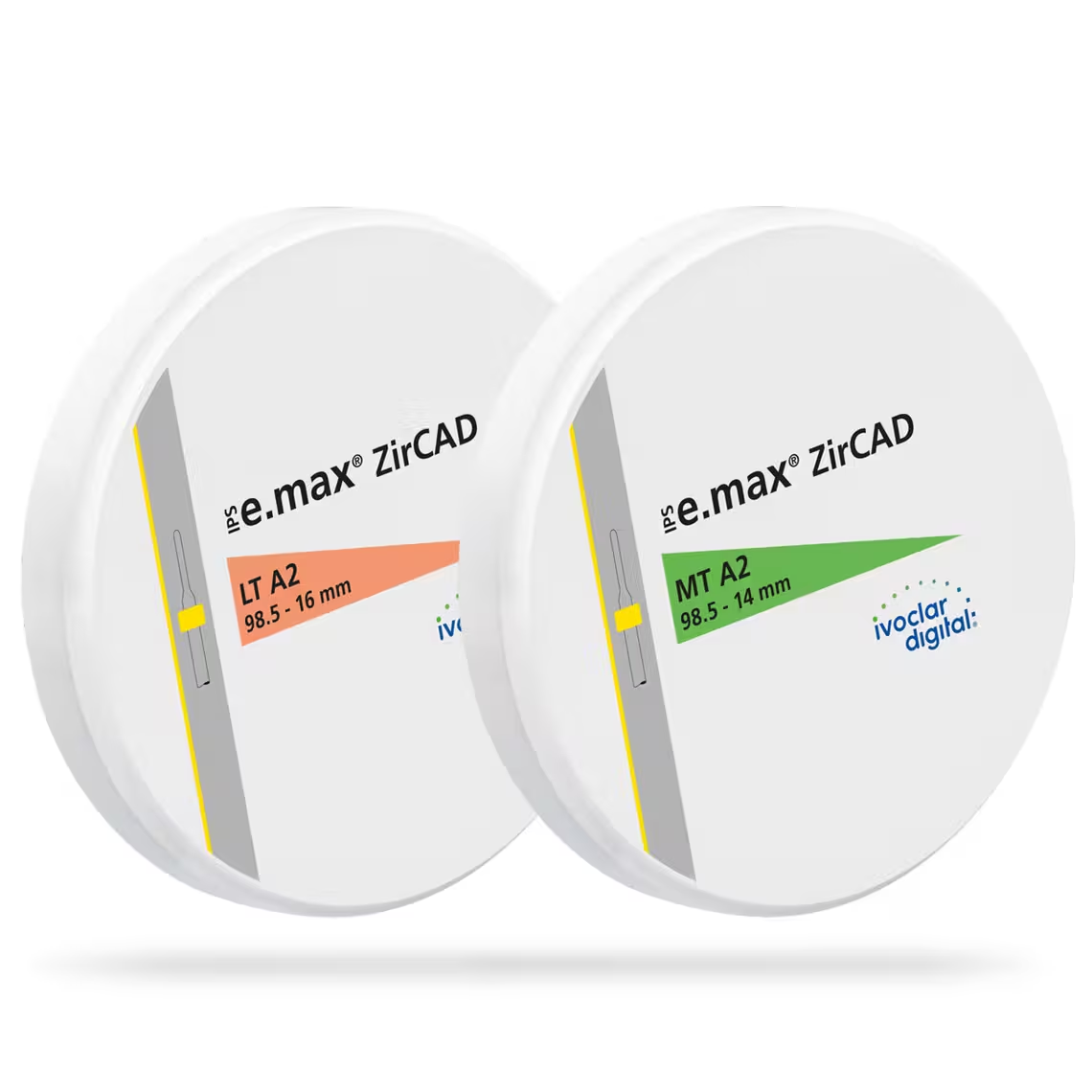
Using a lithium disilicate block (CAD/CAM) or ingot (Press technique), your custom coating is precisely manufactured and colored.
- Placement and Final Check
The prepared e.max coating is tried in your mouth, necessary fine adjustments are made, and it is permanently placed to complete the treatment.
What is the Difference Between IPS e.max and Metal-Supported Coating?
Traditional metal-supported porcelain coatings have a gray metal alloy in their substructure. Over time, this metal can dissolve and accumulate at the gum line, causing visible graying; additionally, the metal substructure prevents light from passing through the tooth, resulting in a duller and more artificial appearance.
With IPS e.max, since the substructure is entirely ceramic, these problems do not occur. Light passes through the material as it does in natural teeth, and no dark line forms at the gum line. This difference makes IPS e.max the preferred option, especially for teeth that are prominent in the smile.
Take the First Step for a Natural and Aesthetic Smile
At Dentasay Dental Clinic, with the globally proven IPS e.max all-ceramic system, you can have a smile that is both healthy and completely natural-looking. Together with our experienced physician team, let’s create the coating plan that best suits your needs.
With IPS e.max, since the substructure is entirely ceramic, these problems do not occur. Light passes through the material as it does in natural teeth, and no dark line forms at the gum line. This difference makes IPS e.max the preferred option, especially for teeth that are prominent in the smile.
Plan your smile with free consultation. Book your online appointment in 30 minutes.

Frequently Asked Questions About IPS e.max
How many years does an IPS e.max coating last?
With proper care and regular check-ups, e.max restorations can be used trouble-free for many years. Ivoclar offers a 10-year warranty for its products.
What is the difference between e.max and zirconium coating?
e.max is preferred especially for front tooth aesthetics because it has higher light transmittance. Zirconium is more frequently used in posterior restorations where durability is paramount. Your dentist will decide which is suitable for you based on the position of your tooth and chewing force.
Will my teeth be cut a lot for e.max coating?
No. Since e.max is a material that can be applied thinly, it requires less tooth reduction compared to metal-supported coatings, thus preserving more of your natural tooth structure.
Is e.max coating a painful procedure?
Local anesthesia is applied if necessary during tooth preparation, so no pain is felt during the procedure. Mild sensitivity after the procedure resolves on its own within a few days.
Is e.max only suitable for front teeth?
No. e.max can be used in a wide range of indications such as veneers, inlays, onlays, crowns, bridges, and implant-supported prostheses, both in the anterior and posterior regions.